For a village of its size, Kasol eats remarkably well. Decades of Israeli, European and Indian backpackers have left it with menus that run from hummus and schnitzel to wood-fired pizza and banana pancakes, alongside the food of the Kullu hills and the Tibetan plateau. Cafés are also where the valley’s social life happens: you take off your shoes, sit on cushions and stay for hours.
What to order
| Dish | What it is | Where you will find it |
|---|---|---|
| Shakshuka | Eggs poached in spiced tomato sauce, with bread | Israeli-style cafés in Kasol, Chalal and Tosh |
| Hummus, falafel & pita | Chickpea dip, fried chickpea balls and flatbread, often as a platter | Most cafés in Kasol |
| Sabich & schnitzel | Aubergine-and-egg pita; breaded fried chicken | Israeli menus |
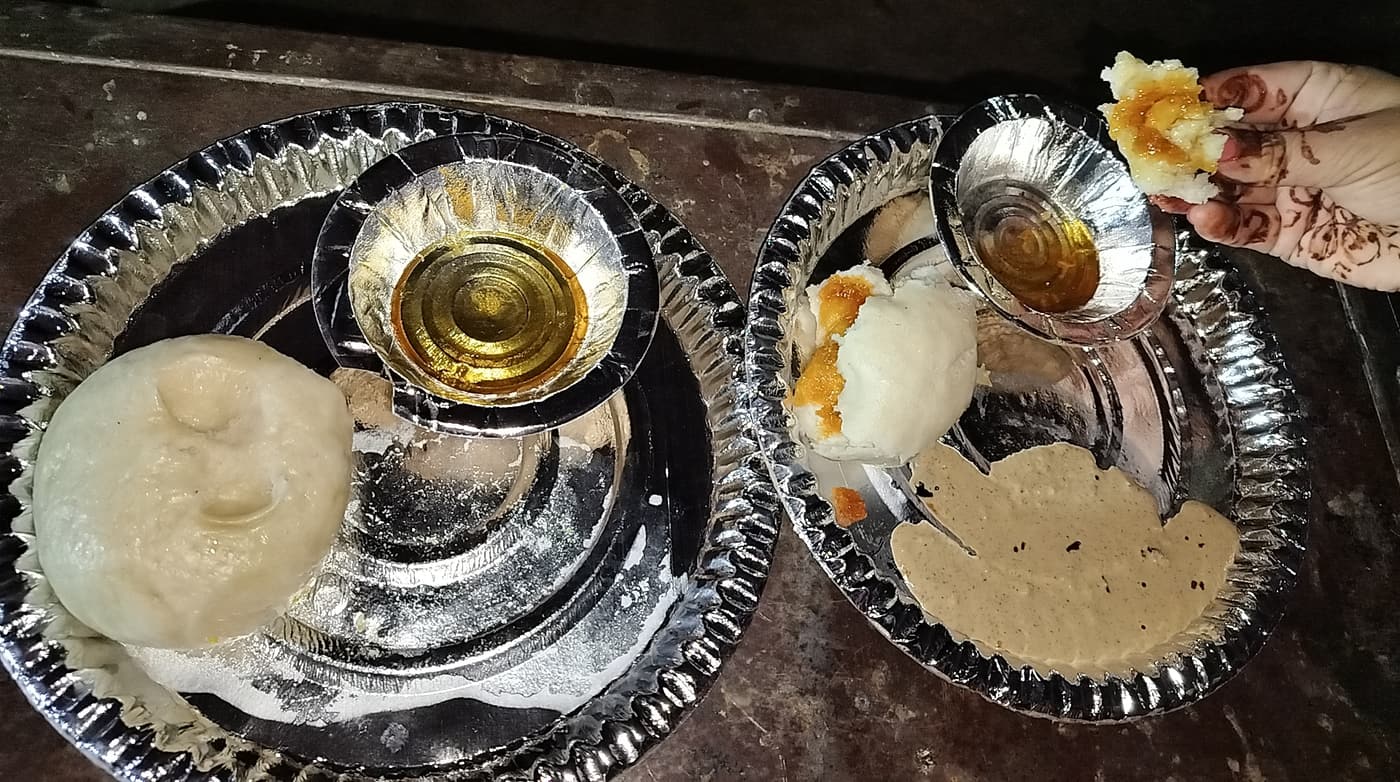
| Siddu | Steamed wheat bread stuffed with poppy seed, walnut or lentil paste, eaten with ghee | Himachali stalls and homestays |
| Trout | River trout, fried or grilled | Restaurants in Kasol and along the valley |
| Kullu dham | A festive meal of rice, lentils, rajma and sweet rice | Weddings, festivals and a few local restaurants |
| Momos & thukpa | Steamed dumplings; noodle soup | Tibetan-run cafés and street stalls |
| Langar | Free vegetarian meal of dal, rice and roti | Gurdwara Manikaran Sahib |
The Israeli kitchen
Kasol’s nickname, “Mini Israel”, is earned at breakfast. An Israeli breakfast here means eggs, chopped salad, hummus, labneh, bread and tea or coffee, and it will keep you going until evening. Shakshuka arrives bubbling in its pan. Menus are often printed in Hebrew as well as English. If you keep kosher, ask at the Chabad house about what is available in season.
Himachali food
Look beyond the café menus for the food of the hills. Siddu is the dish to try: a fat steamed bread with a savoury or sweet filling, split open and soaked in ghee. Trout from the cold rivers of Kullu is served simply fried or grilled. In homestays you will eat rajma (kidney beans), rice, seasonal greens, thick rotis and home-made pickle. Kullu’s festive dham is harder to find but worth asking about.
Tibetan and street food
Steamed or fried momos with fiery chutney are sold on the main street from mid-afternoon; thukpa is the thing for a cold evening. At Manikaran, try hot jalebis in the bazaar after the langar.
Bakeries and coffee
The “German bakery” is a fixture of the Himalayan backpacker trail, and Kasol has several, selling cinnamon rolls, apple crumble, chocolate balls and brown bread. Real espresso is increasingly easy to find; the classic valley drink, though, is a pot of ginger-lemon-honey tea.
Well-known names
Long-running cafés that travellers have recommended for years include Evergreen, Moon Dance, Jim Morrison Café, Little Italy, Bhoj and Buddha Place in Kasol. Cafés here change hands, cooks and quality from season to season, so treat any list — including this one — as a starting point and check recent reviews or simply follow the crowd.
Langar at Manikaran
The free kitchen at Gurdwara Manikaran Sahib feeds every visitor, whatever their faith. It is not a tourist attraction but an act of service: cover your head, sit in the row, eat what you are given and leave your plate clean. A donation is welcome and never requested.
Eating in the upper valley
Tosh has a full set of cafés with terraces. In Kalga, Pulga and Tulga you mostly eat where you sleep, and the food is simpler and home-cooked. On the Kheerganga trail there are seasonal tea and noodle stalls; prices rise with the altitude because everything is carried up.
Practical tips
- Water: drink filtered or boiled water. Refill your bottle at cafés rather than buying plastic.
- Hygiene: busy places with a quick turnover are the safest. Be careful with salads and uncooked food in the monsoon.
- Service is slow. Food is cooked to order by one or two people. Order before you are hungry.
- Vegetarian and vegan: easy. Most menus are largely vegetarian; say “no egg, no dairy” clearly for vegan meals.
- Alcohol: sold in licensed shops and some restaurants. Do not carry it into Manikaran’s gurdwara or into villages such as Grahan that ask visitors not to.
- Paying: carry cash. UPI is common in Kasol but the network is not dependable.
- “Special” items: food or drinks offered with cannabis are illegal and of unknown strength. Decline them.