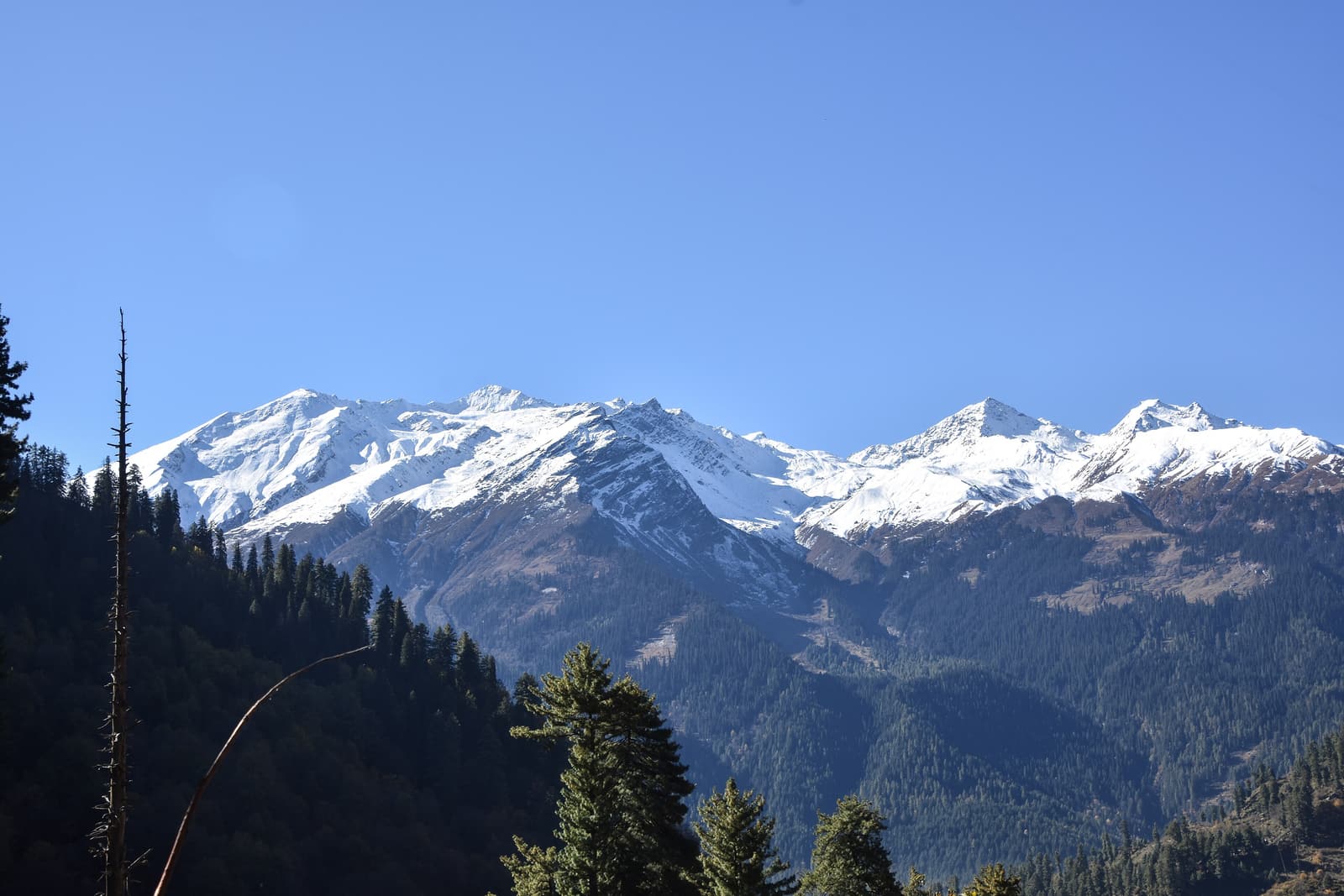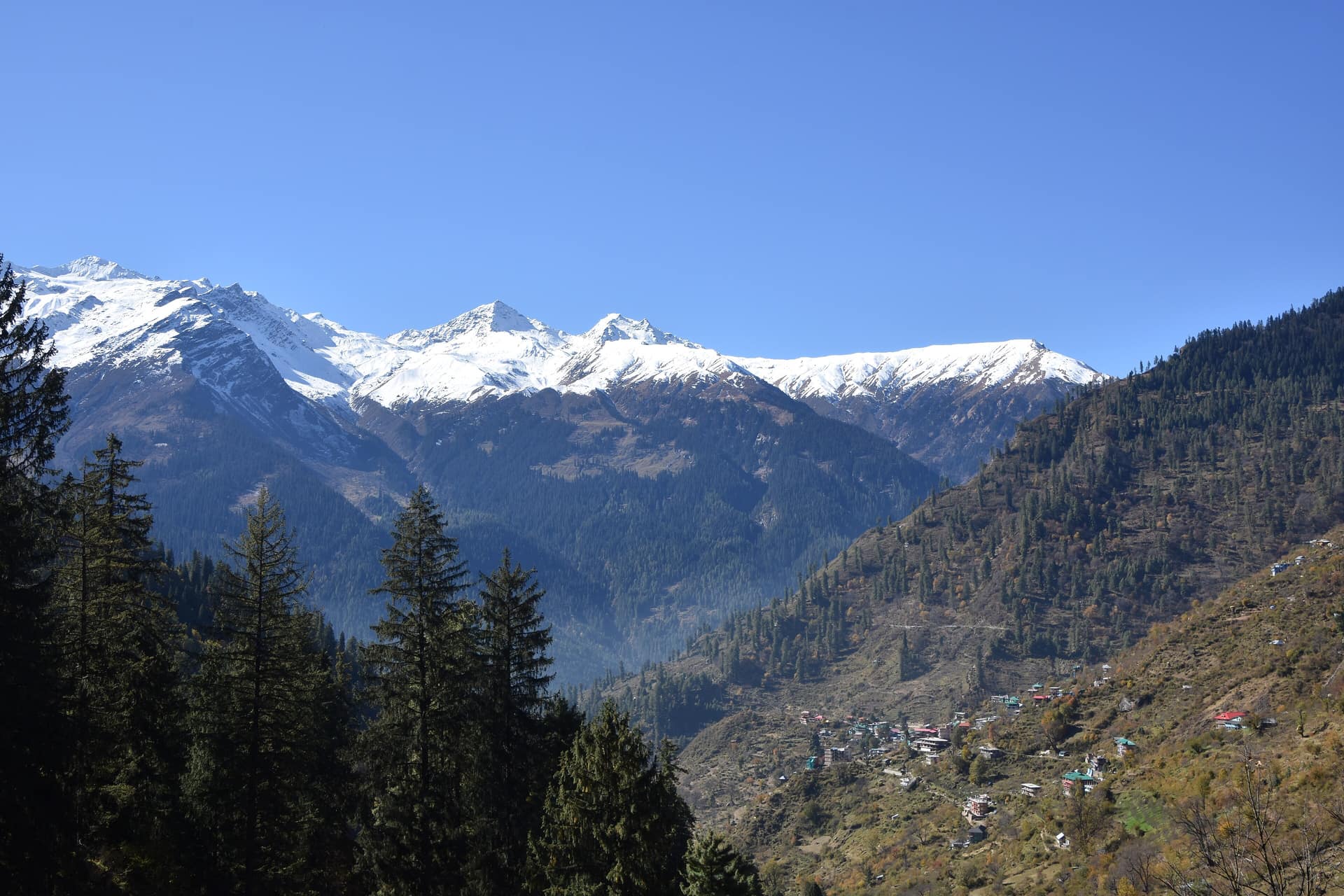
The Parvati is a glacial river that rises below the Pin Parvati Pass and runs west for about 90 km to join the Beas at Bhuntar, in the Kullu district of Himachal Pradesh. Its valley is steep, heavily forested with pine and deodar, and dotted with hot springs. Kasol, at about 1,580 m, is the main traveller base.
A short history of a backpacker village
The valley’s old life is in its hill villages — Malana, Rasol, Grahan, Tosh, Pulga — each with its own deity and temple, and in Manikaran, a pilgrimage centre for centuries. Kasol was little more than a hamlet on the road to Manikaran until foreign backpackers began to arrive in the 1970s and 80s. From the 1990s it became a favourite of young Israelis travelling after military service, which is why you will find Hebrew signs, a Chabad house and Israeli food here.
Since the 2010s domestic tourism has grown fastest. On long weekends the village fills with visitors from Delhi, Chandigarh and Punjab, and hotels have spread along the road towards Manikaran. The quieter valley people come looking for is still there — you just have to walk twenty minutes to find it.
The places not to miss
 Kasol & around
Kasol
The backpacker village on the Parvati river
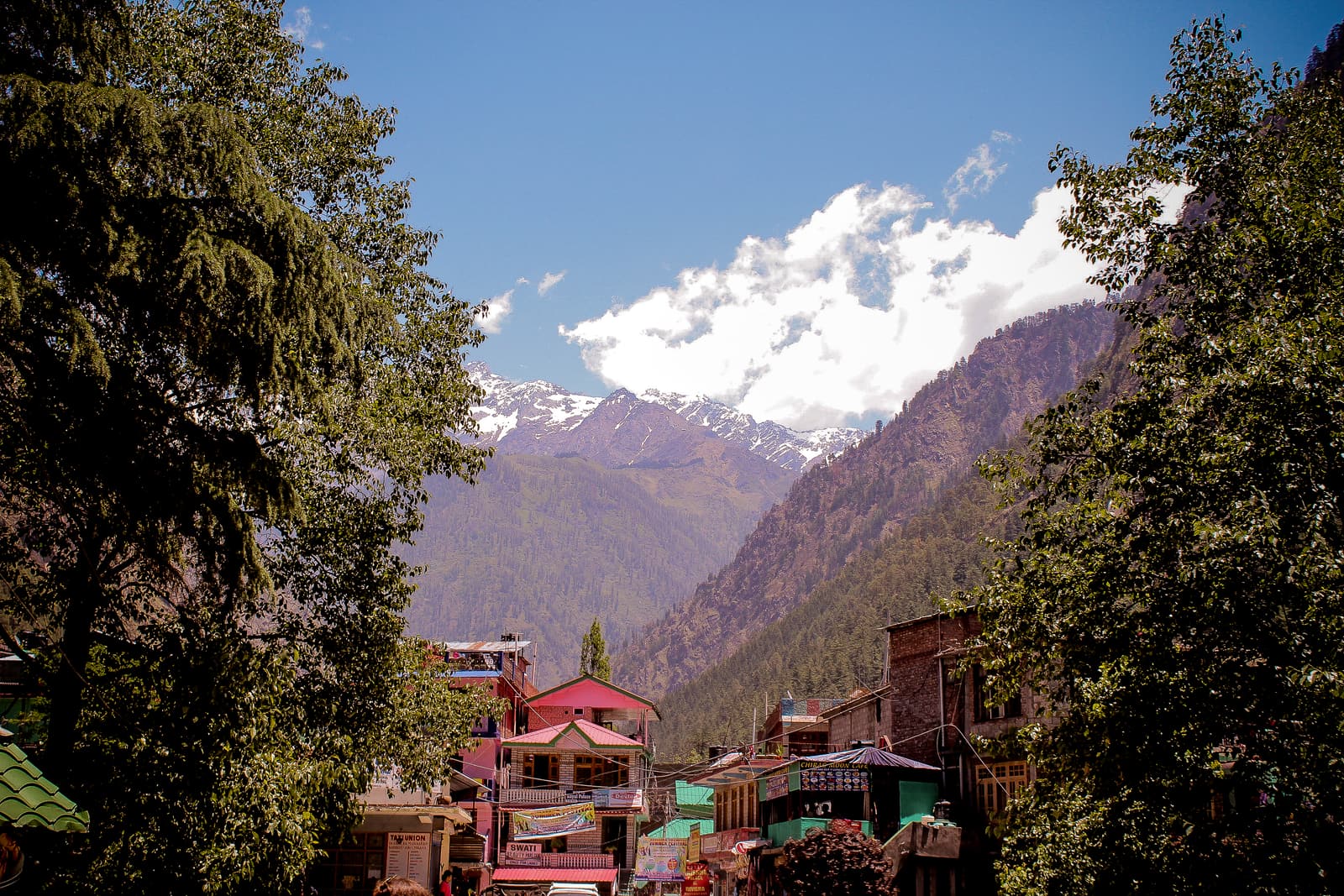
A strip of guesthouses, cafés and pine forest at about 1,580 m on the banks of the Parvati, Kasol is the base camp for the whole valley: river walks, Israeli and Himachali food, a small market, and trails to Chalal, Rasol and Grahan starting from the village itself.
 Kasol & around
Manikaran
Gurdwara, temples and boiling springs
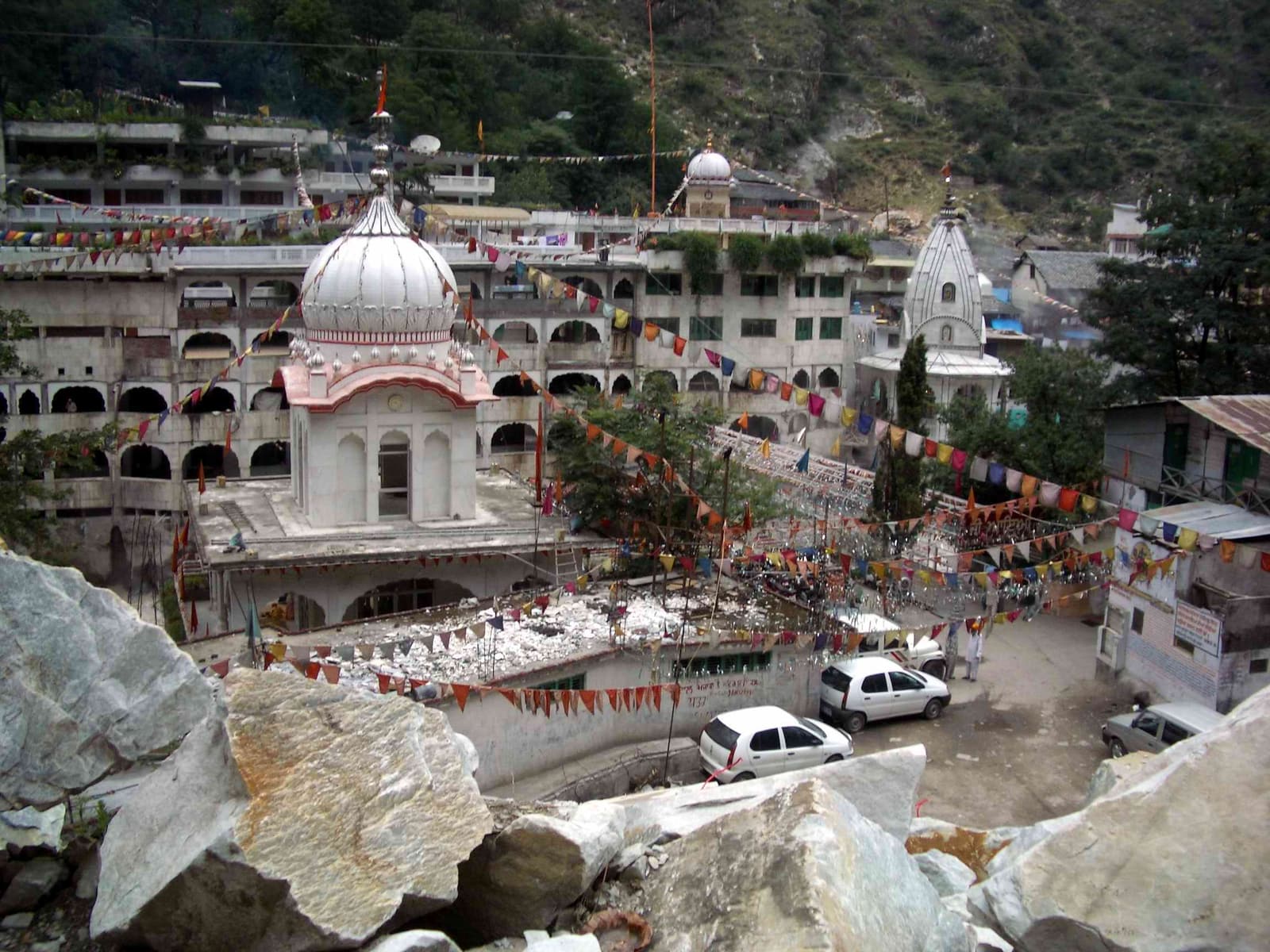
Four kilometres upriver from Kasol, Manikaran is a pilgrimage town for both Sikhs and Hindus. Steam rises from hot springs beside the cold Parvati river, the gurdwara serves free langar to everyone, and rice for the kitchen is cooked in the spring water itself.
 Kasol & around
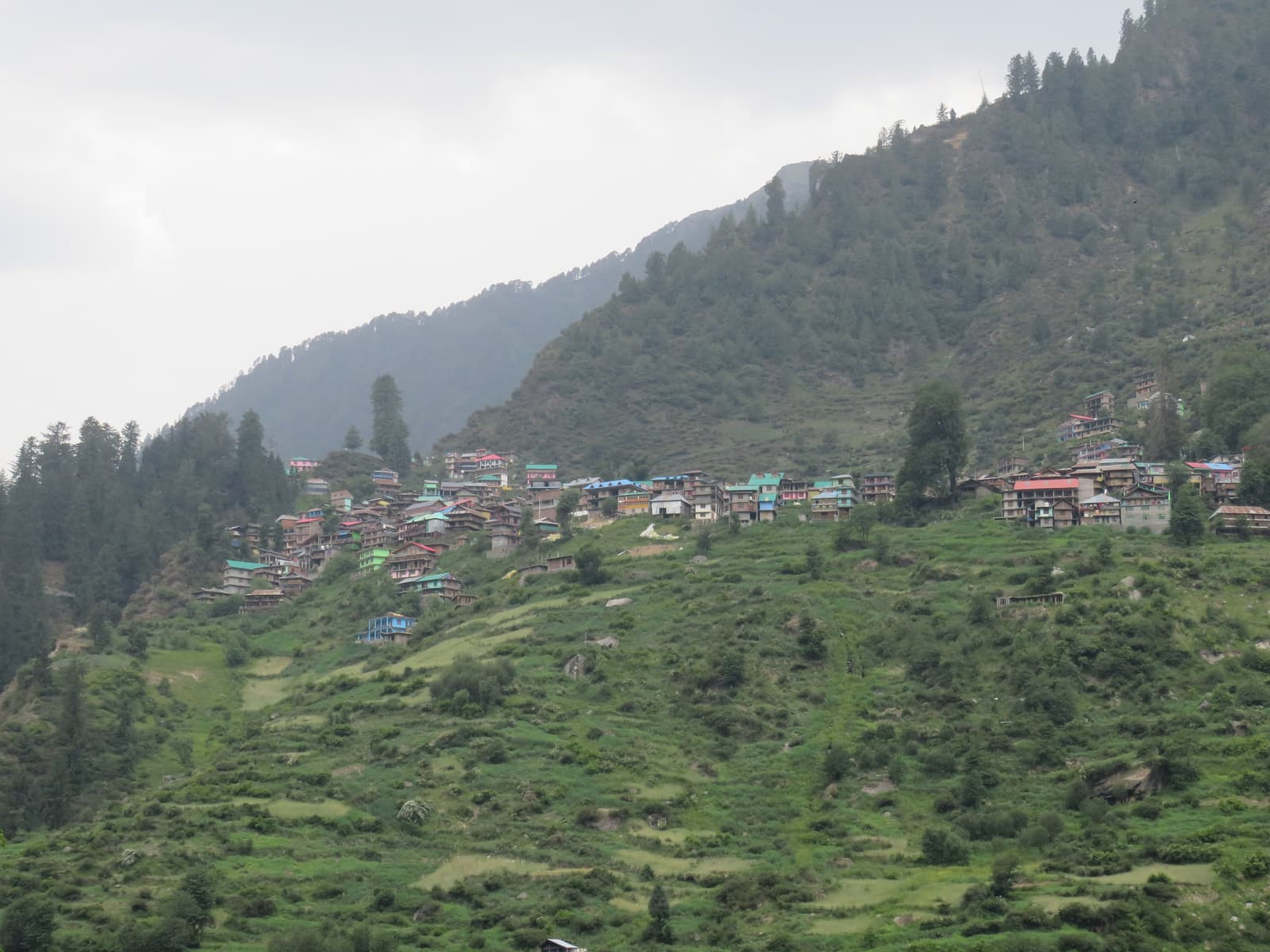
Malana
An ancient village with its own rules
Malana sits alone on a high shelf in a side valley, with its own dialect, its own village council and the deity Jamlu at the centre of life. Visitors are welcome to walk through, but only on the village’s terms: stay on the path and do not touch people, houses or temples.
 Upper Parvati Valley
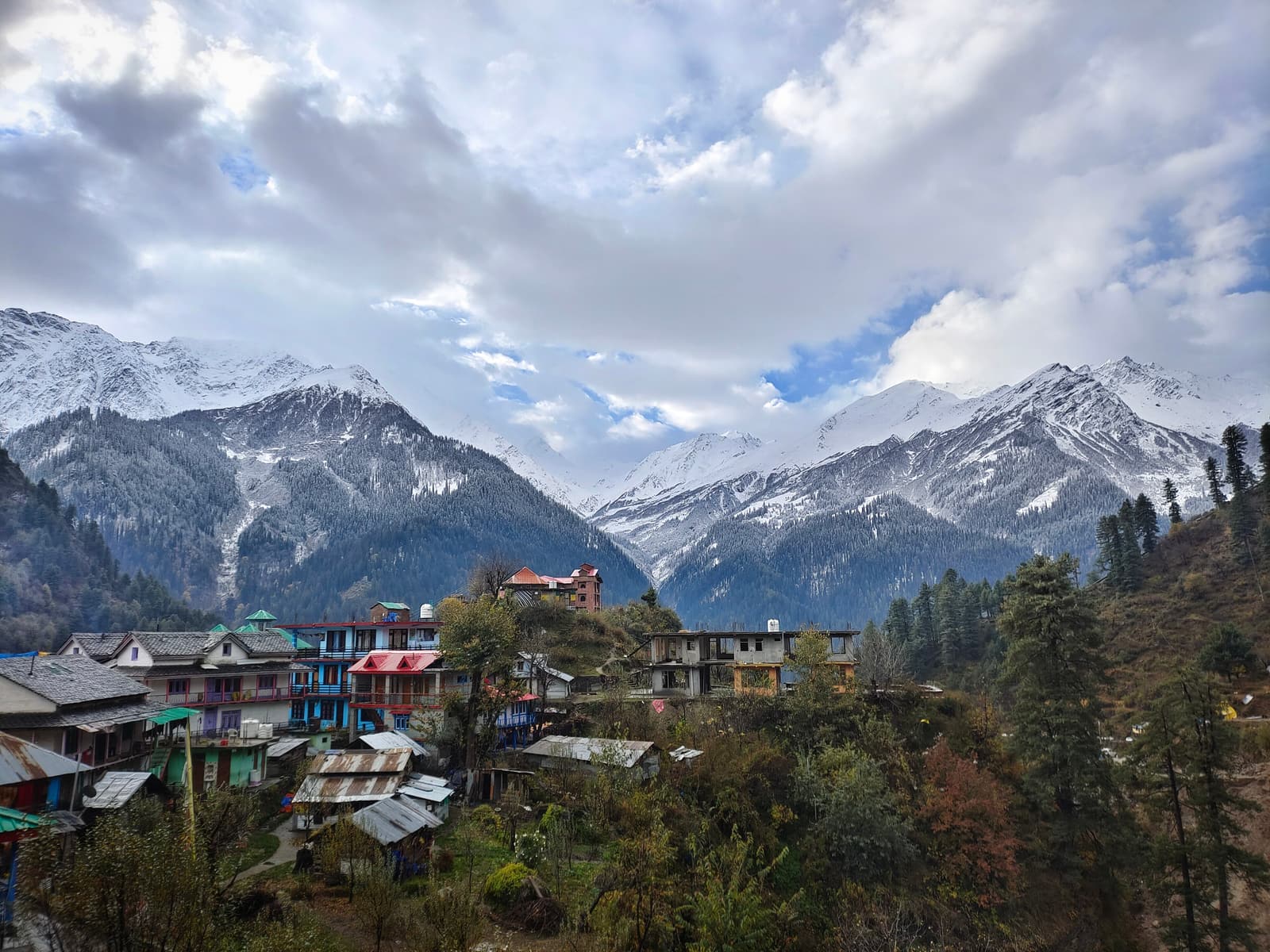
Tosh
The village at the end of the road
Perched at about 2,400 m above the meeting of the Tosh stream and the Parvati, Tosh has the widest mountain views of any village you can reach by road in the valley. Guesthouses with sunny terraces, a waterfall walk and snow in winter make it the classic next stop after Kasol.
See the full list of places for Chalal, Rasol, Grahan, Pulga and Kalga and the high treks.
Local culture and customs
- Village deities: every village has a devta whose temple is the centre of community life. In many villages — Malana most strictly, but also Tosh, Rasol and others — outsiders may not enter or touch the temple. Look for signs and ask.
- Manikaran: cover your head and remove your shoes in the gurdwara; no tobacco or alcohol in the complex.
- Photographs: ask before photographing people, especially women and children, and do not photograph inside shrines.
- Dress: casual is fine in Kasol; dress more modestly in villages and religious places.
- Language: Hindi and the local Kullvi dialect; English is widely understood in Kasol, and you will hear plenty of Hebrew and Punjabi.
- Greetings: “Namaste” works everywhere; “Sat Sri Akal” at the gurdwara.
Money, phones and practicalities
- Cash: Kasol and Manikaran have a few ATMs that often run dry. Withdraw in Bhuntar or Kullu. There is nothing beyond Manikaran.
- Digital payments: UPI is accepted by many cafés and shops in Kasol but fails when the network does. Foreign cards are rarely accepted.
- Mobile signal: usable in Kasol and Manikaran; weak at Tosh, Kalga and Pulga; mostly absent on the Kheerganga trail.
- Electricity: power cuts are common in bad weather. Carry a power bank and a torch.
- Medical: there are basic clinics and pharmacies in Kasol and Manikaran; the nearest hospital is in Kullu. Bring any regular medicines.
- Costs: the valley is good value. Simple rooms and café meals are inexpensive by Indian hill-station standards; prices rise sharply on long weekends and in May–June. Check current rates rather than relying on old blog figures.
What to pack
- Shoes with real grip — trails and even village paths are stony and often wet.
- A warm layer for evenings in every season, and proper winter clothing from November to March.
- A rain jacket (essential June to September) and a cover for your pack.
- Torch or headlamp, power bank, refillable water bottle.
- Swimwear and a small towel for the hot springs; a scarf to cover your head at the gurdwara.
- Sun cream and sunglasses — the sun is strong at altitude.
- Photo ID. Indian citizens need it for hotel check-in; foreign visitors must carry their passport and visa.
Permits and registration
No permit is needed to visit Kasol, Manikaran, Tosh or the villages. For treks, the Kullu administration has at different times required registration, restricted solo trekking on certain routes or closed trails in the monsoon. Rules change; ask at your guesthouse or a registered trekking agency before setting out. Trekkers who cross the Pin Parvati Pass into Spiti should check the current permit rules with their operator.
The law on cannabis
The valley’s reputation for hashish is well known, so let us be plain. Cannabis resin and other narcotics are illegal in India under the Narcotic Drugs and Psychotropic Substances Act. Possession can lead to arrest and prison; there are police checkpoints on the Kasol road, and foreign nationals are treated no differently. This site does not promote drug use. Enjoy the valley for what is legal and remarkable about it.
Travel responsibly
- Carry your rubbish down from trails and out of roadless villages. Waste is the valley’s most visible problem.
- Refill a bottle instead of buying plastic; many cafés will refill for free or a small charge.
- Keep noise down at night. People live here and get up early.
- Light no fires in the forest and leave the river banks as you found them.
- Hire local guides and stay in family-run homestays where you can.
Ready to book something? Compare the real tours for Kasol or see where to stay.